Whether you’ve just started wearing prescription eyewear or have had them for years, it’s good to know how to take care of them. After all, your stylish frames or colored lenses aren’t just a fashion statement—they’re what help you see! By caring for your contact lenses and glasses properly, you will be able to see worry-free while getting the most out of your investment.
Contact lenses sit directly on your eye, so it’s important that you give them the utmost care. This will include using multipurpose care solutions or hydrogen peroxide care solutions depending on your eye doctor’s recommendations. You can avoid these concerns by switching to daily contact lenses. Prescription eyeglasses also require special care in order to prevent scratching of the lenses and misalignment of frames.
Caring for Contact Lenses
Taking proper care of your contacts is as important as brushing your teeth twice a day. Doing so will increase their longevity as well as protect you from an eye infection and other complications. The secret to caring for contact lenses is the lens care system provided by your eye doctor. This system was specifically selected to be compatible with your lenses and the way you wear them according to your lifestyle.
There are a wide variety of lens care systems out there. However, they can be broken down into two different types:
- Multipurpose care solutions
- Hydrogen peroxide care solutions
Multipurpose Care Solutions
Multipurpose care solutions are an all-in-one cleaning system. This means that they can be used to clean, rinse, disinfect, and store your lenses. These contact lens solutions are popular for those who wear soft contact lenses.
To get the most out of your multipurpose solution and prevent lens-related vision problems, be sure to:
- Wash and dry your hands before handling your contacts
- Rub and rinse your lenses
- Store the lenses in the proper container with fresh solution
- Pour out old solution then rinse and rub the container with new solution daily
- Dry the container with a new, clean tissue
- After each use, place the clean case upside down on clean, new tissue without the lids
You should also replace your contact lens case every three months to avoid bacteria buildup. This kind of care system will keep your monthly contact lenses clean, ultimately providing you with clear vision for the full month before you replace the lenses.
Hydrogen Peroxide Care Solutions
Some patients may experience an allergic reaction when wearing contact lenses soaked in a multipurpose solution. In these cases, an eye doctor may decide that it’s a good idea to prescribe a hydrogen peroxide care solution.
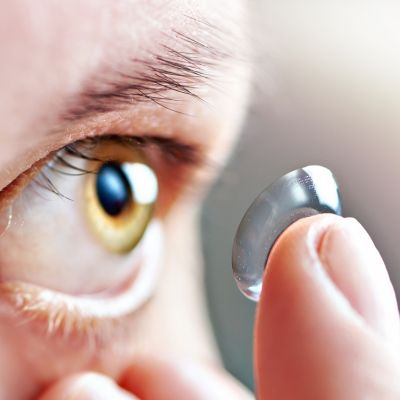
These lens-cleaning solutions require a special case included with the solution when you buy it. The case is designed to react to the hydrogen peroxide, turning it into a harmless saline solution. You will need to use the case whenever you take out your lenses to ensure they are properly cleaned. Failure to do so can cause pain and irritation when wearing your contact lenses.
Make sure your lenses get as clean as possible using hydrogen peroxide care solutions by:
- Following the label instructions carefully when cleaning
- Only using fresh solution when cleaning your lenses
- Let the lenses soak for the proper amount of time (4 – 6) hours
- Rinse your lenses with saline solutions after cleaning but before putting them back in
Don’t let your contacts come into contact with tap water or any other kind of water. Your doctor-recommended solution is the only liquid you should use to clean and store your lenses.
To learn if you can be allergic to your contact lenses, click here!
Skip These Steps with Daily Contact Lenses in Knoxville, TN!
You have a lot of choices when it comes to the kind of contacts you wear. Extended-wear contacts are often designed to be worn for a month and then replaced. While you will have to clean them every day, they will still collect debris that can irritate your eyes. You will need to replace them at regular intervals to protect the comfort and safety of your eyes.
Daily contact lenses are the perfect alternative to extended-wear varieties. Unlike reusable contacts, you throw daily disposable lenses away after every night and open a fresh pair every morning. This ensures that you don’t have to deal with caked-on allergens or worry about infections from forgetting to clean them every night.
Click here to read our FAQ for daily disposable lenses!
Caring for Eyeglasses Glasses
If you wear prescription glasses then you know how important it is to take care of them. They can be expensive and plastic lenses can be easily scratched, making it harder to see through them. Even if you’ve been wearing glasses for years, it’s still a good idea to refresh yourself on how to care for them properly. This will protect your investment as well as your ability to see.
To learn about our wide range of stylish frames and lenses, click here!
How to Care for Your Prescription Glasses

Proper lens care is essential if you want your glasses to last a long time. To protect your lenses from unnecessary and accidental damage, make sure to:
- Clean them regularly with warm water and a drop of dish soap
- Alternatively, use a premade cleaner specifically for cleaning your lenses
- Dry them with a lint-free towel or, microfiber cloth
- Wash your cleaning cloth regularly based on the manufacturer’s instructions
- Keep your glasses in a hardshell case when you’re not wearing them
- Always lay your glasses down with the lenses facing upward
- Use both hands when putting glasses on or taking them off
- Only wear them on your nose and not on the top of your head
Not wearing your glasses correctly can cause the frames to become misaligned. When this occurs, it can actually make them less effective even if they’re perfectly clean. If you’re concerned bad habits have caused your frames to become misaligned, bring them with you to your next appointment and our optical team can readjust them for you.
What to Avoid When Caring for Your Prescription Glasses
It’s easy to make mistakes with your glasses, even if you’ve worn them for years. To get the most out of your pair, be sure to avoid:
- Wiping the lenses when they’re dry, which can cause scratches
- Using clothes that can have rough surfaces such as paper napkins or tissue paper
- Cleaning with ammonia, vinegar, or other substance that can remove protective coatings
- Using saliva to clean your lenses
- Carrying them in a crowded bag or purse without a proper case
- Placing them near a sink or vanity where they can get cosmetics on them
- Leaving them in a hot car
Are you looking to upgrade your prescription contact lenses or glasses in Knoxville, TN? Click here to schedule your next eye appointment!
It’s important to take the best care possible of your contacts since they rest directly on your eyes. This includes using multipurpose or hydrogen peroxide care solutions depending on your optometrist’s recommendations. These steps can be avoided with daily contact lenses. For glasses, it’s important to protect your lenses and frames from damage so you can see clearly.
Hardin Valley Eyecare & Optical has been serving Knoxville since 2009. Located at 10904 Spring Bluff Way, you can schedule an appointment online or give us a call at (865) 888-0892.